My research studies institutional transformations in advanced democracies. I am particularly interested in understanding how the interaction of structural changes such as globalization and the rise of a digitalized knowledge economy with different national institutions affects popular preferences and public policies. My research on these questions spans the fields of comparative political economy, political sociology and historical political economy.
Fiscal Policy
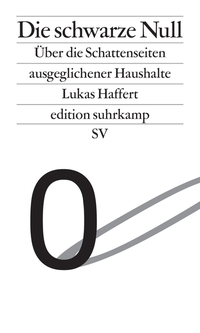
My research in the field of comparative political economy focuses on questions of fiscal policy and, more specifically, on two main topics: the politics of budget surpluses and cross-national differences in tax policies. In my work on budget surpluses, I study countries with budget surpluses and show that a reduction of public debt does usually not lead to an increase of state capacity, as the decisions of the preceding consolidation period strongly constrain the use of the surpluses. In my research on tax policy, I develop a two-dimensional model of tax policy conflict and explain political choices as the result of the interplay of these distributional and allocational dimensions. My book about the „Schwarze Null“ has been published by Suhrkamp in 2016: Link
Urban-Rural Divides
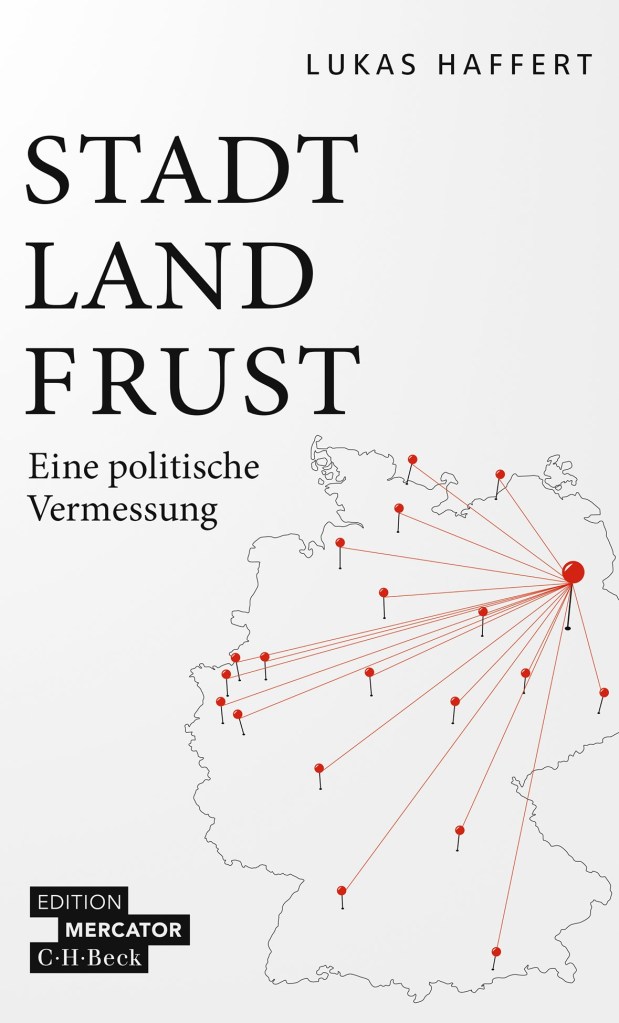
Most of my recent research studies urban-rural inequalities and their representation in the political system. On the demand side, I am particularly interested in the importance of urban and rural social identities and in the age dimension of the urban rural divides. On the supply side, I am interested in the mobilization of urban-rural divides by political actors and in the effects of different electoral systems on the representation of urban and rural interests. I have summarized some of my findings in the book „Stadt, Land, Frust“ that was published by C.H. Beck in 2022: Link
SNF Project
My project “Unequal Representation of Urban and Rural Voters”, funded by the Swiss National Science Foundation, studies the political representation of urban and rural citizens. Numerous studies report that rural voters feel less represented by politics and perceive a lower political efficacy than urban voters.
In this project, I ask to extent this perception corresponds to actual inequalities in representation. Do policymakers really represent urban voters better than their rural counterparts?
Historical Political Economy
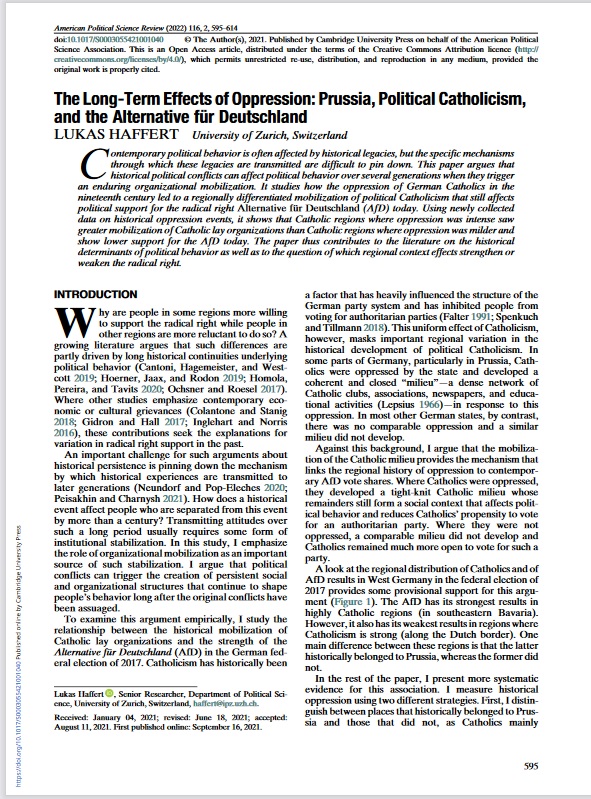
In my paper “The Long-Term Effects of Oppression: Prussia, Political Catholicism, and the Alternative für Deutschland”, I exploit the discontinuity at the former Prussian-Bavarian border in the German state of Rhineland-Palatinate to show that the oppression of Prussian Catholics in the 19th century triggered a mobilization of Catholic civil society organizations that still prevents Catholics in the respective regions from voting for the AfD. -> Link
In the paper “Misremembering Weimar” Nils Redeker (Hertie School of Governance) and Tobias Rommel (TU Munich), we use a survey experiment to show how historical misunderstandings of Weimar era hyperinflation affect the economic policy preferences of German voters. -> Journal , Policy Paper
Together with Cathrin Mohr and Bastian Becker, I am currently organizing a Scoping Workshop on the Future of Historical Political Economy in Europe, funded by the Volkswagen Foundation.
 Lukas Haffert